

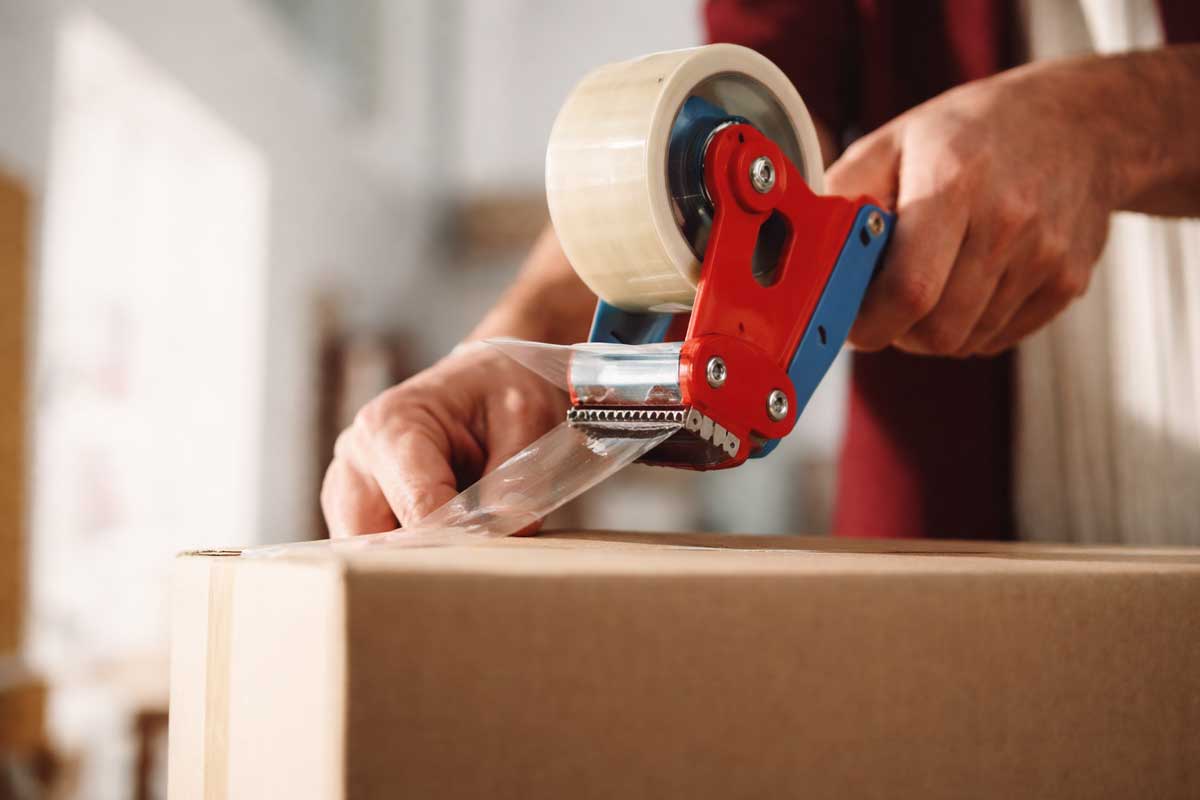
Understanding the packing tape vs. shipping tape differences can help businesses protect products, prevent damaged cartons, and avoid unnecessary packaging expenses. Although people often use the terms interchangeably, packing tape and shipping tape can differ in adhesive strength, backing material, durability, and intended application. Some tapes are designed for lightweight storage boxes, while others are engineered to withstand heavy loads, temperature changes, rough handling, and long transportation routes.
Choosing the right tape may seem like a small packaging decision, but it can have a major impact on the security of a shipment. A tape that loses adhesion could allow a carton to open during handling. A tape that is stronger than necessary may increase costs without providing a meaningful benefit. By considering the weight of the package, the carton material, the storage environment, and the shipping process, businesses can select a tape that performs reliably without overcomplicating their packaging operations. If you’re weighing options for an upcoming order, browsing carton sealing tape and label solutions is a good starting point for comparing what’s available.
Packing Tape vs. Shipping Tape: Is There Really a Difference?
Packing tape is a broad term that can describe several types of adhesive tape used to close boxes, bundle products, or prepare belongings for storage. Standard packing tape is commonly used for household moves, office organization, short-term storage, and lightweight cartons. It may be made with acrylic, hot melt, or natural rubber adhesive, depending on the product.
Shipping tape is generally expected to meet more demanding performance requirements. It is used to secure cartons that will travel through warehouses, distribution centers, delivery vehicles, and parcel carrier networks. Shipping cartons may be stacked, dropped, exposed to vibration, or stored in changing temperatures. As a result, shipping tape is typically selected for dependable adhesion, tear resistance, and long-lasting carton closure.
The distinction is not always printed clearly on the product label. Some manufacturers market carton sealing tape as packing tape, shipping tape, or both. Rather than relying only on the name, buyers should evaluate the tape’s specifications.
Important factors include:
- Adhesive type
- Film or backing material
- Total tape thickness
- Tensile strength
- Temperature resistance
- Holding power
- Carton weight
- Surface condition
- Application method
- Expected storage duration
For a lightweight box moving from one room to another, an economical general-purpose packing tape may be sufficient. For a heavy carton traveling across the country, a higher-performance shipping tape may be necessary, especially when it’s paired with sturdy corrugated boxes built for transit.
What Makes a Good Carton Sealing Tape for Heavy Shipments
Heavy shipments put more stress on a carton closure. The tape must resist the pressure created by the contents of the box, especially when the carton is lifted, stacked, tilted, or dropped. A good carton sealing tape needs enough adhesive strength to remain bonded to the corrugated surface and enough backing strength to resist splitting or stretching.
One of the first considerations is carton weight. Heavier boxes generally require thicker tape, stronger adhesive, or additional reinforcement. However, weight is not the only factor. A carton filled with dense metal components may stress the tape differently than a carton containing lightweight but bulky products. Unevenly distributed contents can also place pressure on the box flaps and seams.
A dependable tape for heavy shipments should offer:
- Strong initial tack
- Good adhesion to corrugated cardboard
- Resistance to splitting and tearing
- Consistent performance during transportation
- Reliable holding power over time
- Compatibility with manual or automated dispensers
- Resistance to expected temperature and humidity conditions
The condition of the carton also matters. Dusty, recycled, coated, waxed, or heavily printed cartons can be more difficult to seal. Recycled corrugated materials may contain shorter fibers and surface variations that affect adhesion. A tape that works well on a clean, new carton may not perform the same way on a dusty or highly recycled box.
Businesses should also consider the tape width. Two-inch carton sealing tape is common for standard boxes, but wider tape can provide more surface coverage for oversized or heavy cartons. Applying tape in an H-pattern can further improve closure security. This method seals the center seam and both edge seams of the carton, helping prevent dust, moisture, and tampering from reaching the contents.
For especially heavy, valuable, or irregular shipments, reinforced filament tape may be used along with standard carton sealing tape. The filament tape adds strength, while the carton sealing tape provides a complete closure across the box flaps.
The Best Tape Options for Different Packaging and Shipping Applications
No single tape is ideal for every packaging operation. The best option depends on the carton, product weight, transportation process, storage environment, and application equipment.
Standard packing tape is often a practical choice for:
- Household moving boxes
- Office files
- Lightweight retail products
- Short-term indoor storage
- General carton closure
- Boxes that will receive minimal handling
Higher-performance shipping tape is more appropriate for:
- E-commerce orders
- Heavy cartons
- Long-distance transportation
- Recycled corrugated boxes
- High-volume fulfillment operations
- Packages exposed to temperature changes
- Products moving through multiple distribution centers
Specialty tapes may be needed when standard carton sealing tape cannot provide enough protection. Filament tape can reinforce heavy boxes or secure bundled materials. Freezer-grade tape can maintain adhesion in cold environments. Printed security tape can discourage tampering or provide handling instructions. Water-activated tape can create a strong bond with corrugated cartons and provide visible evidence when a box has been opened.
The right selection should also support operational efficiency. A tape that is difficult to unwind, frequently breaks, or requires multiple layers can slow production. A slightly higher-quality product may reduce tape usage, improve sealing consistency, and save labor.
How Packing Tape and Shipping Tape Differ in Strength and Adhesion
The strength of tape is influenced by both the backing and the adhesive. The backing provides structural support, while the adhesive creates the bond between the tape and the carton.
Standard packing tape may use a thinner polypropylene film that is suitable for lightweight boxes. Shipping tape may use a thicker film, a stronger adhesive system, or both. A thicker tape is not automatically better, but it may offer improved resistance to tearing and splitting.
Adhesion can be evaluated in several ways. Initial tack describes how quickly the tape grips the carton when applied. Holding power describes how well it remains bonded over time. Shear strength refers to the tape’s ability to resist forces that pull the adhesive parallel to the carton surface.
A tape with an aggressive initial tack may be useful in fast packaging lines because it bonds quickly. A tape with strong long-term holding power may be more important for boxes stored for several months. The right balance depends on the application.
Environmental conditions also affect adhesion. Cold temperatures can make some adhesives less flexible. High heat can soften certain adhesives and cause the tape to shift. Humidity, dust, oils, and condensation may also interfere with the bond.
For consistent results, tape should be applied with firm, even pressure. Pressure-sensitive tape requires contact pressure to create a secure bond. Simply laying tape over the carton seam without pressing it down may result in weak adhesion.
Acrylic vs. Hot Melt vs. Natural Rubber Adhesive Tapes Explained
The adhesive system is one of the most important differences between carton sealing tapes. Acrylic, hot melt, and natural rubber adhesives each offer distinct performance characteristics.
Acrylic adhesive tape
Acrylic tape is commonly selected for long-term storage and applications involving temperature changes. It generally offers good aging characteristics and resistance to ultraviolet light. The adhesive may become stronger after it has had time to bond fully with the carton.
Acrylic tape is often suitable for:
- Long-term warehouse storage
- Cartons exposed to sunlight
- Packages stored in changing temperatures
- General-purpose shipping
- Boxes that do not require extremely aggressive initial tack
One consideration is that acrylic tape may have lower initial tack than hot melt tape. It may require firm application pressure and a clean carton surface to create the best bond.
Hot melt adhesive tape
Hot melt tape provides strong initial tack and is frequently used in high-volume packaging and shipping environments. It bonds quickly to corrugated cartons and performs well in many automated carton sealing systems.
Hot melt tape is often suitable for:
- E-commerce fulfillment
- Fast packaging lines
- Standard corrugated cartons
- Medium to heavy shipments
- Packages receiving frequent handling
- Automated carton sealing equipment
Hot melt adhesive can be a dependable choice for recycled corrugated surfaces, but its performance may vary under extreme temperatures. Businesses should verify the recommended application and service temperature ranges before using it in freezer, refrigerated, or high-heat environments.
Natural rubber adhesive tape
Natural rubber adhesive is known for aggressive tack and strong adhesion to challenging surfaces. It can bond effectively to dusty, rough, recycled, or irregular corrugated materials. It may also perform well when a carton requires immediate sealing strength.
Natural rubber tape is often suitable for:
- Heavy-duty packaging
- Challenging carton surfaces
- Highly recycled corrugated boxes
- Dusty packaging environments
- Cold-temperature applications
- Packages requiring aggressive initial adhesion
Natural rubber adhesive tape may cost more than basic acrylic options, but its stronger bond can reduce the need for multiple tape layers. The most economical tape is not always the product with the lowest price per roll. A stronger tape that uses less material and prevents product damage may provide better overall value.
When to Use Reinforced Filament Tape vs. Standard Packing Tape
Standard packing tape is designed primarily to close carton flaps. Reinforced filament tape is designed to provide additional strength. It contains fiberglass filaments embedded in the backing, allowing it to resist stretching and breaking under tension.
Filament tape is commonly used for:
- Reinforcing heavy cartons
- Bundling pipes, lumber, or metal components
- Securing appliances and equipment
- Stabilizing palletized products
- Closing boxes with high internal pressure
- Supporting oversized or irregular packages
- Preventing heavy contents from breaking through carton seams
Standard packing tape is usually sufficient for lightweight and medium-weight cartons when the tape is properly matched to the surface and environment. It is easier to cut, commonly available, and suitable for routine carton closure.
Reinforced filament tape should be considered when the package is unusually heavy, the contents place outward pressure on the box, or the shipment requires additional reinforcement. It may be applied around the width or length of a carton to create a secure band. In many cases, it works best as a supplemental reinforcement rather than the only closure material.
For example, a business might use standard shipping tape to close the carton flaps and filament tape to reinforce the box around its heaviest point. This approach combines complete carton closure with additional tensile strength.
Because filament tape can be difficult to tear by hand, workers may need a specialized dispenser or cutting tool. Packaging teams should also be trained to place the tape correctly. Poor placement can use more tape without meaningfully improving package strength, which is one more reason it pays to work with a supplier that stocks shipping and warehouse supplies built for high-volume operations.
Additional Factors to Consider When Choosing Tape
Beyond adhesive type and tensile strength, businesses should consider how the tape fits into their overall packaging process.
Manual versus automated application
Handheld tape dispensers are flexible and practical for low-volume or variable packaging operations. Automated carton sealers are better suited to consistent, high-volume production. Tape used in automated equipment must unwind smoothly and maintain consistent thickness and adhesive performance.
Carton quality
A high-quality tape cannot fully compensate for a weak or incorrectly sized carton. Boxes should be selected based on product weight, dimensions, fragility, and stacking requirements. Too much empty space can allow products to move, while an overfilled carton can place excessive pressure on the seams. According to the Fibre Box Association, matching carton strength to the intended load is one of the most effective ways to prevent in-transit damage.
Storage and transportation temperatures
Tape may be applied at one temperature and used at another. A carton could be sealed in a warm facility, stored in a freezer, and transported in an unrefrigerated vehicle. Businesses should consider both the application temperature and the service temperature.
Security requirements
High-value or sensitive products may benefit from tamper-evident tape, custom-printed tape, or water-activated tape. These products can make unauthorized opening more noticeable and support chain-of-custody procedures.
Sustainability goals
Using the correct tape can reduce material waste. A stronger tape may allow a business to use one strip instead of several overlapping layers. Companies may also evaluate tape backing, adhesive composition, recycled content, and compatibility with existing recycling processes.
Frequently Asked Questions
Can packing tape be used for shipping?
Yes, packing tape can be used for shipping when it has adequate strength, adhesion, and durability for the carton. Lightweight packages may only require standard packing tape, while heavy or long-distance shipments may need a stronger shipping-grade product.
Is shipping tape stronger than packing tape?
Shipping tape is often stronger, but product names are not always standardized. Review the tape’s thickness, tensile strength, adhesive type, temperature resistance, and recommended carton weight rather than relying on the label alone.
What type of tape is best for heavy boxes?
Heavy boxes may require heavy-duty hot melt tape, natural rubber carton sealing tape, reinforced filament tape, or a combination of carton sealing and reinforcement tapes. The right option depends on carton weight, surface condition, and handling requirements.
Is acrylic or hot melt tape better for shipping?
Hot melt tape usually provides stronger initial tack and is well-suited to fast packaging operations. Acrylic tape often performs better during long-term storage and exposure to ultraviolet light or temperature changes. The better choice depends on the shipping environment.
Does packing tape work in freezing temperatures?
Some packing tapes lose adhesion in cold environments. Freezer-grade or cold-temperature tape should be used for frozen foods, refrigerated products, and cartons that will be sealed or stored in low temperatures.
What width of tape should be used for shipping boxes?
Two-inch tape is common for standard shipping cartons. Wider tape may be appropriate for large, heavy, or overfilled boxes because it provides greater surface coverage across carton seams.
How many strips of tape should be applied to a box?
A standard carton may be secured with one strip along the center seam, but heavy or valuable shipments may benefit from an H-pattern that seals the center and edge seams. Additional reinforcement should be based on package weight and handling conditions.
Can filament tape replace carton sealing tape?
Filament tape can reinforce a carton, but it may not provide the complete seam coverage needed for routine carton closure. Many businesses use filament tape for strength and standard carton sealing tape to close and protect the box flaps.
Why does tape peel off recycled cardboard?
Recycled cardboard may have loose fibers, dust, rough surfaces, or coatings that make adhesion more difficult. A tape with aggressive hot melt or natural rubber adhesive may bond more reliably to these surfaces.
How can a business reduce tape waste?
Businesses can reduce waste by selecting the correct tape strength, using properly adjusted dispensers, training employees, maintaining carton sealing equipment, and avoiding unnecessary overlapping layers. Packaging testing can identify the lowest amount of tape needed for secure performance.
Find the Right Packaging Supplies With GMR Packaging Corp.
The difference between packing tape and shipping tape comes down to performance. Carton weight, adhesive type, backing strength, surface condition, storage time, and transportation environment all influence which tape will provide the most reliable closure. Selecting the right tape can reduce product damage, improve packaging speed, and prevent unnecessary material use.
GMR Packaging Corp. is a nationwide packaging supplies supplier. With numerous manufacturing plants and distribution centers, we provide packaging supplies to facilities across the United States. All of our products are of the highest quality, and we stand behind every product we sell.
We currently serve businesses in a wide range of industries, including:
- Cosmetics
- Frozen and fresh food
- Inflight catering
- Bakeries
- Wholesale nurseries
- Lighting manufacturing
- Pool liner manufacturing
- Pool cover manufacturing
We have helped many customers save time and money by making subtle changes to their packaging materials or redesigning their current packaging processes. Whether you need carton sealing tape, reinforced tape, shipping supplies, or a more efficient packaging solution, our team can help you evaluate your options.
Contact us and request a quote today.